Serum Packaging Sizes That Fit Retail vs Clinic Channels
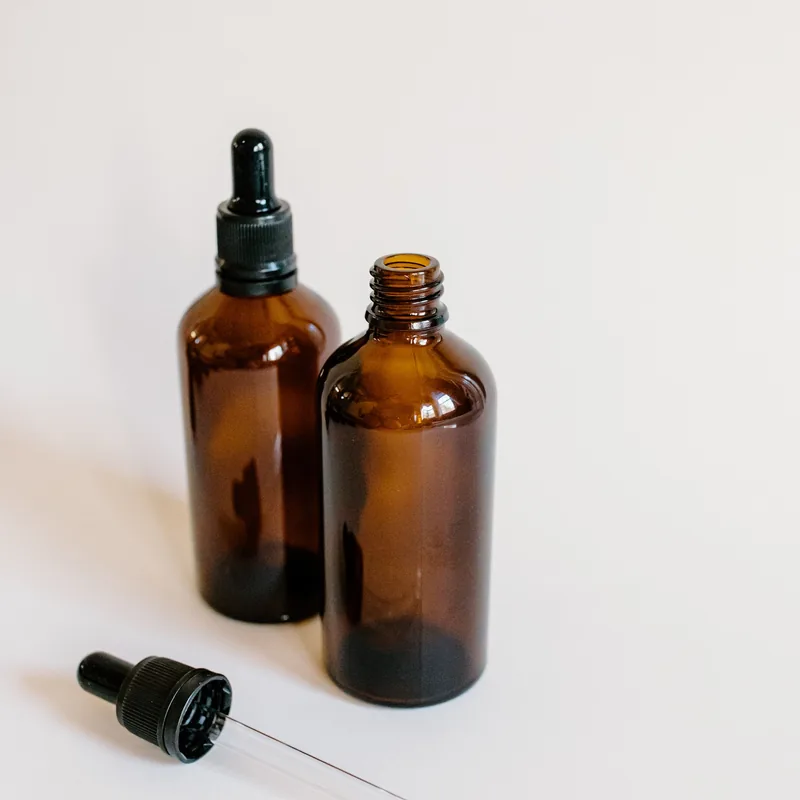
Fifteen, thirty, fifty or a hundred milliliters: serum packaging sizes for retail brands are decided by shelf economics, while clinic packs are decided by cost per treatment, and…
A private label serum cost per unit is never one number, and the quote that looks cheapest at the top is usually the one that grows by 20% before the first pallet ships. In our own Guangzhou plant, a 30 ml anti-aging serum filled at 1,000 pcs per SKU breaks into five cost blocks — actives and base, packaging, filling, testing and the freight/MOQ spread — and only two of them are normally visible on a one-page quotation. This breakdown walks through each block with the numbers we actually put into a quotation, so you can read any supplier’s number and see where your money is going and where a cheaper line has been paid for somewhere else.

A unit price is a division, not a material. We take the whole batch cost — actives, base, packaging, conversion time, testing and documentation — and divide it by sellable units, which is never the units you ordered. At 1,000 pcs per SKU, a 3% overage on the active plus a 1.5% fill-weight rejection rate together remove roughly 4–5% of the run before anything is counted as shippable.
That is why two suppliers can quote the same formula 25% apart and both be honest. One has amortised its MOQ spread across 1,000 pieces; the other has folded changeover, waste and a small-order surcharge into a second line item you were not shown. Before you compare two quotes, ask each supplier to divide their number into the same five blocks — the rest of this article is that template, and it is also how we build our own OEM and ODM quotations.
Here is the split we use for a mid-range 30 ml anti-aging serum at 1,000 pcs per SKU. Treat the shares as ranges, not constants: a 0.3% encapsulated retinol and a 15% L-ascorbic acid formula do not share a cost curve.
| Cost block | Share of unit price | What moves it | The hidden line |
|---|---|---|---|
| Actives and base | 35–45% | Active concentration, overage, antioxidant system | Assay overage needed for a 24-month claim |
| Packaging | 18–30% | Airless pump vs dropper, PCR content, decoration | Tooling and print plates amortised into 1,000 pcs |
| Filling and conversion | 10–14% | Batch size, changeover, fill accuracy | Open-product time and yield loss |
| Testing and documentation | 6–10% | 12-week stability, challenge test, COA/MSDS | Retest after any formula or pack change |
| Freight, MOQ spread and margin | 12–20% | Order size, Incoterm, destination market | Small-order surcharge sold as “free” freight |
When you read a private label serum cost per unit in that order, the cheap quote stops being mysterious. Ask which block the saving came from. If the answer is “packaging”, check what the bottle actually is. If the answer is “actives”, ask for the HPLC assay spec on the finished goods. Our 24-formula library shows the formula variants that price furthest apart — the same 30 ml format can move 60% between a plain hydrating base and a retinoid-plus-peptide build.
Overage is the single most misunderstood line on a quotation. To claim 0.5% retinol at the end of a 24-month shelf life, we fill 0.60–0.65% at batch, because free retinol degrades through the run and the storage window. That is 20–30% more active than the label says, and on a premium retinoid it is the difference between a $2.40 and a $3.10 unit.
Testing is the second quiet block. A real documentation pack is not a PDF template: it is a 12-week stability program at 40 °C and 75% RH with HPLC assays at weeks 0, 4, 8 and 12, an ISO 11930 preservative challenge test, and then the export paperwork — COA, MSDS and a Free Sale Certificate per destination. Add a patch test panel if you are claiming suitability for sensitive skin. Each of those is billable work, and each one exists because a buyer asked for it. You can see exactly what we hold on file on our quality and certification page, and it is the block where a supplier with no in-house lab quietly subcontracts and marks up.
The real cost of a private label serum cost per unit that skips this block shows up months later: a batch that fails its 8-week assay and has to be reformulated and refilled, or a shipment that stops at customs for a missing certificate.
Cheaper is a real option, not a trick — you just have to name what you are trading. Three examples from our own bench.
None of these are wrong choices. Choosing them by accident — because the quote did not separate them out — is what turns a launch into a rework bill.
We quote the five blocks, then a landed cost per unit for your Incoterm, because the block that surprises buyers most is freight and MOQ spread. A supplier whose “unit price” is ex-works and whose “free shipping” is a $180 small-order surcharge is not cheaper — it is just later on the invoice.
A practical comparison: ask each supplier for the same 30 ml, same actives, same pack, 1,000 pcs per SKU, delivered to the same port. Then ask four questions in writing — the overage percentage, the fill-weight tolerance, the pack specification by material and capacity, and what is included in the documentation pack. Two quotes that match on all four are genuinely comparable; a 20% gap on the private label serum cost per unit almost always sits in one of those four answers. Our plant page shows the ISO 8 filling room and the equipment the conversion block is priced against.
Yes, but mostly through the two blocks you cannot see. Doubling from 1,000 to 2,000 pcs mainly halves the packaging tooling and MOQ spread, which typically moves the number 8–15%. Actives and base barely move with volume, because the chemistry is the same at any batch size.
Usually one of three things: lower overage (so the label claim is thinner), a cheaper pack (a dropper where you assumed airless), or a documentation pack that excludes stability and the Free Sale Certificate. Ask the four questions above and the gap usually becomes visible.
We quote a band from the formula library — a floor price on the closest existing base and a ceiling on the most expensive plausible build — so you can budget before sampling. The final number locks after the bench sample and the pack are signed off, and after the 7-day sampling round.
—
Send us your brief and we will come back with a cost-per-unit split and a formula within 48 hours — 1,000 pcs per SKU minimum, samples in 7 days and a 35-day bulk lead time. Talk to our formulator with your target market and shelf life, and we will show the four lines where a cheaper quote is quietly cheaper. If you want to pressure-test your current supplier’s number first, start with our MOQ cost explainer.
Fifteen, thirty, fifty or a hundred milliliters: serum packaging sizes for retail brands are decided by shelf economics, while clinic packs are decided by cost per treatment, and…
Retinol does not fail in the bottle because the formula was wrong. It fails because the package lets oxygen in twice a day for six months. When a…
Buyers who raise the ISO 22716 vs GMPC certification question usually want a one-line answer about which logo looks better in a quotation pack. The honest answer is…