Serum Packaging Sizes That Fit Retail vs Clinic Channels
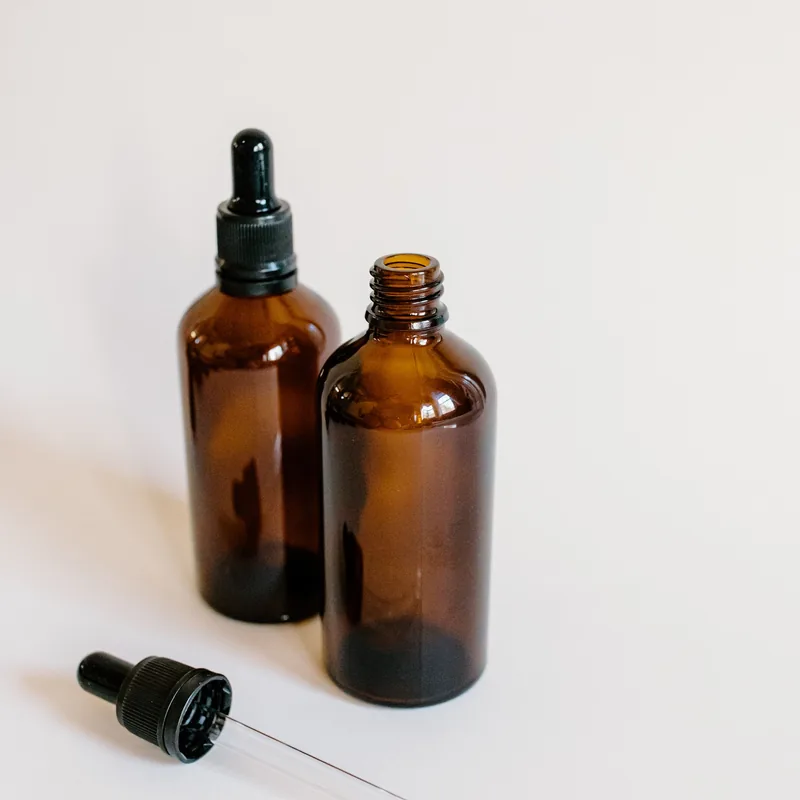
Fifteen, thirty, fifty or a hundred milliliters: serum packaging sizes for retail brands are decided by shelf economics, while clinic packs are decided by cost per treatment, and…
A peptide serum formulation lives or dies on three numbers most brand owners never see: the assay on the peptide concentrate, the temperature at which it enters the batch, and the pH the finished gel sits at for the next 24 months. Matrixyl 3000, Argireline and copper peptides are the three most-requested actives in that class, and they are not interchangeable — one is a pair of lipopeptides that needs a solubilizer, one is a hydrophilic hexapeptide whose evidence base is thinner than its marketing, and one is a copper complex that reacts with half of a normal ingredient list. Below is what we run in the kettle, at what dose, what it costs per unit, and the briefs where we tell a client to drop a peptide rather than pay for it.

The concentrate step is the killer. A “5% Matrixyl 3000” claim on artwork describes the use level of the supplied concentrate, not the peptide content: the palmitoyl tripeptide-1 and palmitoyl tetrapeptide-7 inside that concentrate sit in the low hundreds of ppm, and the rest of the drum is glycerin, water and solubilizer. That is normal and defensible, but it means you cannot reason about the formula from the label percentage alone.
What actually breaks peptides is ordinary process chemistry. A peptide bond hydrolyses faster with heat and water activity, so a batch held 40 minutes at 70°C before cooling can lose measurable active before it reaches the filling line. Lots that assay at 92% of label at release routinely read 78-85% after 12 weeks at 40°C if the pH was allowed to drift, or if trace iron and nickel entered upstream from an uncoated fitting. None of that is fixed by a better carton.
Three chemistries, three jobs. This is the table we use on a brief call.
| Peptide | Chemistry | Use level we run | What it buys | Where it fails |
|---|---|---|---|---|
| Matrixyl 3000 | Palmitoyl tripeptide-1 + palmitoyl tetrapeptide-7, lipophilic | 3-5% of the concentrate | Elasticity and firmness support over 8-12 weeks; pairs well with a daytime, retinol-free brief | Needs a solubilizer (we use 3-5% polysorbate 20) or it films on glassware; nothing visible in week one |
| Argireline | Acetyl hexapeptide-8, hydrophilic | 5-8% | Expression-line positioning on crow’s feet and forehead at a cost a 30 ml dropper can carry | The SNARE-complex mechanism is largely in vitro; the consumer claim needs an 8-week instrument study; adds almost no body to the gel |
| Copper peptide | GHK-Cu, copper tripeptide-1 | 0.5-1% | Renewal and collagen-support story, plus a blue color the buyer can see with no lab work | Reacts with ascorbic acid, thiols and chelators; pH window 5.5-7.0; discolors on metal contact |
| Multi-peptide blend | Six peptides at 0.5-1% each | 3-6% total | Breadth on the INCI panel | Each peptide lands below its own evidence dose once total cost is capped |
The dose column is where most brands get surprised. A 1% copper peptide brief is a far stronger formula than a 1% Matrixyl 3000 brief, because those two concentrates carry very different levels of active. That mismatch is the single most common error we see in a peptide serum formulation brief, and it is invisible on the artwork. If you want the firmness platform specifically, our peptide serum platform runs the same three starting points we would quote, with use levels already fixed.
Lipophilic peptides must be pre-dissolved. We build a premix of the Matrixyl concentrate with glycerin and polysorbate 20 at 45-50°C, then fold it into the cooled base in a single pass below 40°C. Skip the premix and a 5% load leaves a haze that no filtration removes.
Copper peptides drive most of the reformulation work in this category, because the blue color is a visible failure indicator and buyers spot it before QC does.
One process rule sits behind all five: metal contact time. Peptide hydrolysis is catalysed by trace iron and nickel, so peptide batches stay off uncoated mild-steel fittings and we pull a raw-water metals panel every quarter. Whether a peptide serum formulation survives month one is usually decided there, not by the stabilizer blend.
| Line item | Size | Rough magnitude |
|---|---|---|
| Matrixyl 3000 concentrate | USD 850-1,400 / kg | 1.5 g at 5% in a 30 ml fill ≈ USD 1.30-2.10 per unit |
| Acetyl hexapeptide-8 | USD 500-1,100 / kg | 2.4 g at 8% ≈ USD 1.20-2.65 per unit |
| GHK-Cu | USD 2,500-5,000 / kg | 0.3 g at 1% ≈ USD 0.75-1.50 per unit |
| Pilot batches to land the formula | 3-5 batches at 5-20 kg | Fixed cost per formula |
| 12-week stability, 40°C/75% RH plus 25°C | Two chambers, four timepoints | Fixed cost per formula |
| 8-week instrument study, 30 subjects | Crow’s feet wrinkle depth | Usually the largest single line |
A peptide serum formulation that carries all three actives adds roughly USD 3-6 of peptide per 30 ml unit. That is real money at 1,000 pcs, but it is not the line that decides whether the project is viable — the fixed validation work is. The honest read: a fourth peptide costs 30-60 cents a unit and five figures of documentation, and buys label copy rather than performance.
Two starting points cover most peptide briefs. A 5% Matrixyl 3000 firming formula is the default for a daytime elasticity product in a dropper. A 1% copper peptide renewal formula suits a night product in a 30 ml airless pump — the pump is not optional, because GHK-Cu oxidizes on air contact and the blue will shift in a wide-mouth bottle within months. If the brief is expression lines, an 8% Argireline expression line formula is the sharper start, and a 6-peptide complex exists for brands that want panel breadth.
Our peptide lines run the water and glycerin phases at 55-60°C, cool to below 40°C, then take the peptide premix and the preservative in sequence under a low-shear paddle at 300-600 rpm. No rotor-stator after the peptide is in. Release testing covers appearance, pH, viscosity, peptide assay by HPLC against a named reference standard, and a 0.22 µm filtration check if the brand is aiming at a sterile-adjacent claim. Every peptide serum formulation we scale up is assayed at release, 24 hours, 4 weeks and 12 weeks, and the specification we hold is 90-110% of label peptide content at every timepoint — a number most peptide suppliers will not put in writing.
Filling runs in an ISO 8 cleanroom under ISO 22716 and GMPC. Sample lead time is 7 days, MOQ is 1,000 pcs per SKU, and bulk is 35 days. We issue a batch COA with the peptide assay, an MSDS, the full INCI and a Certificate of Free Sale; CPNP notification for the EU and any Halal filing are the brand’s own paperwork, and our quality page separates what comes from us from what comes from you.
Yes, and it is common. Run Matrixyl at 3-5% and Argireline at 5% rather than maxing both, pre-dissolve the lipophilic component, and land pH at 5.5-6.0. The limiting factors are cost and dropper viscosity, not chemistry.
Almost always ascorbic acid, a chelator, or oxygen ingress. Check the INCI for any vitamin C derivative and for disodium EDTA first, then confirm the container is genuinely airless. Once the complex has broken, no additive brings the color back.
Ask for the HPLC assay on the specific lot, not the marketing sheet, and run the same assay at release on your first three production batches. If the supplier cannot name the reference standard and the column conditions, the figure on the COA is not a measurement.
Usually not. Ten peptides at 0.3% each is a panel line, not a formula. Two or three actives at their evidence dose will outperform it and cost less to validate — which is the whole argument for choosing a peptide serum formulation on assay data rather than peptide count.
—
Send us your brief with the target market, the container and the claim you need to defend, and we will come back within 48 hours with a formula, a use level and a unit price — including whether your peptide serum formulation should carry three actives or one. Samples run 7 days, MOQ is 1,000 pcs per SKU, and bulk lead time is 35 days.
Fifteen, thirty, fifty or a hundred milliliters: serum packaging sizes for retail brands are decided by shelf economics, while clinic packs are decided by cost per treatment, and…
Retinol does not fail in the bottle because the formula was wrong. It fails because the package lets oxygen in twice a day for six months. When a…
Buyers who raise the ISO 22716 vs GMPC certification question usually want a one-line answer about which logo looks better in a quotation pack. The honest answer is…