Serum Packaging Sizes That Fit Retail vs Clinic Channels
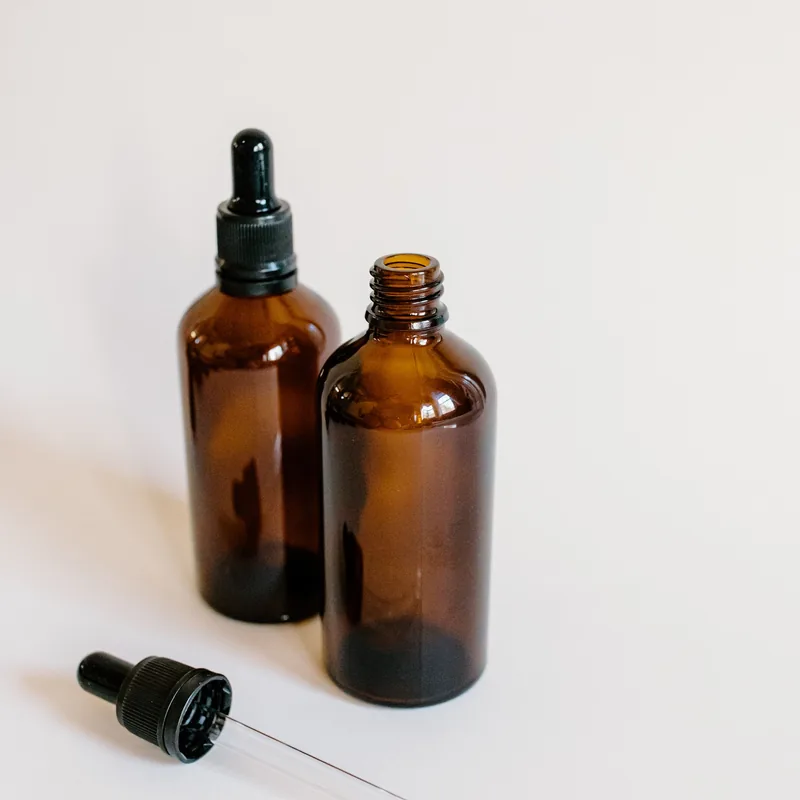
Fifteen, thirty, fifty or a hundred milliliters: serum packaging sizes for retail brands are decided by shelf economics, while clinic packs are decided by cost per treatment, and…
An EU CPNP notification for private label serum is a submission, not an approval. The portal takes your file, issues a reference number, and never once checks whether the 1.0% retinol inside that bottle is legal to sell in the European Union. That check belongs to a safety assessor you pay and to the inspector who may walk into your warehouse two years later. We have watched brands launch in Rotterdam and Manchester holding a clean CPNP receipt for a formula that could not legally be placed on the market, because nobody asked who the responsible person actually was. Here is the version of that conversation we have with every brand before we freeze a formula: what you file, what we hand you, and where the two files stop being interchangeable.

The European Union runs one system and Great Britain runs another, and they are not versions of each other. In the EU, Regulation (EC) No 1223/2009 Article 13 requires the responsible person to notify through CPNP before the first unit is placed on the market, and Article 4 requires that responsible person to be established inside the EU. In Great Britain, the UK Cosmetics Regulation applies and the notification goes into SCPN, the Submit Cosmetic Product Notification service run by the OPSS. A GB notification needs a responsible person established in Great Britain.
Northern Ireland is where brands get caught. Under the Windsor Framework it stays inside the EU cosmetic regime, so a Belfast listing needs a CPNP entry and an EU-established responsible person, not an SCPN entry. One serum, three addresses:
| Market | Portal | Responsible person must be established in | Address printed on pack |
|---|---|---|---|
| EU 27 | CPNP | an EU member state | EU RP name and EU address |
| Great Britain | SCPN (OPSS) | Great Britain | UK RP name and GB address |
| Northern Ireland | CPNP | an EU member state | EU RP name and EU address |
If your launch plan covers Dublin, Manchester and Belfast, you need two responsible persons, two portal accounts, and both addresses on one carton. Deciding that at artwork stage costs nothing. Deciding it after the first 1,000 cartons are printed costs a reprint and a week of air freight you did not budget.
The notification is shorter than most brands expect: product identity, responsible person, product category, formula frame, presence of nanomaterials, CMR substance data if relevant, and the label artwork. It takes an afternoon once the paperwork exists. The paperwork is the project.
| Field | What the portal asks | Where brands get it wrong |
|---|---|---|
| Product identity | Trade name exactly as sold | Notified name differs by one word from the label; the reference no longer matches the pack |
| Responsible person | Legal entity name and EU address | Factory address entered because it was the only address on the invoice |
| Formula | INCI with concentrations for CMR and Annex substances | Percentage ranges that do not match the CPSR the assessor signed |
| Frame formulation | Only for colorants, preservatives and UV filters | Filled in for a plain serum, then mismapped against a frame that does not apply |
| Nanomaterials | ZnO or TiO2 present in nano form | Missed on tinted or SPF-adjacent serums; Article 16 needs six months’ notice, not six days |
| Label artwork | Upload of the printed pack | Old artwork uploaded, then the pack is reprinted without re-uploading |
One entry per formula, not per pack size. A 30 ml airless pump and a 50 ml dropper of the same bulk are one notification. A 0.3% retinol and a 0.5% retinol are two, even if the base, the fragrance and the carton are identical. Brands that treat the SKU list as the notification list either over-file and pay twice for safety reports, or under-file and ship an unnotified variant.
SCPN does not import from CPNP. There is no migration button, no shared identifier, and no EU Login on the UK side. You create a separate account, re-enter the formula, re-upload the artwork, and name a responsible person with a Great Britain address. The EU CPNP notification for private label serum you filed through a consultant in Amsterdam is a separate legal act from the SCPN entry, and it stays separate even when the formula behind both is the same 30 ml airless fill. The same serum therefore exists twice, in two databases, under two reference numbers, with two legal entities standing behind it.
Both portals are free to file. Anyone quoting you a “CPNP registration fee” is charging for labour, not for the government. The real cost sits in the Cosmetic Product Safety Report: assessors we work with quote roughly €350 to €900 per formula, higher where a nano material or a borderline claim needs extra work, and the report has to be redone whenever the formula changes.
A practical rule from the plant floor: put both addresses on the carton at the first print run. Nine brands out of ten add the UK responsible person after the EU launch, and every one of them pays for a second print run and a second artwork approval to add one line of type.
The responsible person signs the file, but almost none of the data in it originates with them. It comes from the batch records of whoever filled the serum. Every figure an assessor needs to complete the EU CPNP notification for private label serum traces back to one of these documents, so ask for the pack before you sign a purchase order, not after.
| Document | Issued by | What the assessor does with it | Turnaround |
|---|---|---|---|
| Full INCI with concentration ranges | Formulator | Exposure and toxicology calculation in the CPSR | 2 working days |
| ISO 22716 certificate with scope and expiry | Certification body | The GMP statement inside the PIF | Copy on file |
| 12-week accelerated stability at 40°C / 75% RH, plus 3 months real time | Factory lab | Shelf life and PAO justification | 12 weeks |
| Challenge test to ISO 11930 | Microbiology lab | Preservation efficacy for any water-based fill | 4 weeks |
| COA per batch: HPLC assay, pH, viscosity, micro | QC | Release and traceability | With every batch |
| MSDS, heavy metals (Pb, As, Hg, Cd), micro limits | Factory | Annexes to the safety report | 5 working days |
| Primary pack compatibility, 30 ml airless and 15 ml dropper | Factory | Migration and dose-per-application assumptions | 2 weeks |
Two of these cannot be compressed. Accelerated stability is twelve weeks because you need three time points at elevated temperature plus freeze-thaw; running it at eight weeks gives an assessor a data gap they will flag. The challenge test follows ISO 11930 and takes four weeks for the five-organism panel to give a defensible log reduction. Plan the launch calendar around those two numbers and everything else fits inside them.
Reformulating after notification is the expensive path. Any change to the INCI list or to a restricted concentration triggers a new or amended notification, a re-assessment of the affected section of the safety report, and in most cases a fresh stability run. A fragrance swap in month four of a launch is not a tweak; it is six to eight weeks and a new label, and the EU CPNP notification for private label serum you already paid for has to be amended rather than simply updated in place.
The caps themselves moved. Commission Regulation (EU) 2024/996 added Vitamin A to Annex III at 0.3% retinol equivalent for leave-on face products, capped alpha-arbutin at 2% in face products, and kojic acid at 1%. It applies to new products placed on the market from 1 November 2025, with stock already on shelves allowed to sell through until 1 May 2027. If your brief says “1% retinol, maximum strength”, the EU is closed to that formula at that level, and no portal will tell you so.
This is where a formula library earns its keep. The 0.3% encapsulated retinol starter in our retinol serum range sits exactly at the cap, so it can be notified for the EU with the stability and assay data we already hold. The 0.5% and 1.0% versions cannot go to the EU as they stand; they ship to the Gulf, ASEAN and the US, where the equivalent cap is either absent or higher. Splitting a range that way is normal, but it costs a second safety report, a second stability run and a second artwork set, so decide it before the first brief rather than after the first order.
What we will do is hand over the raw material for your file: a frozen formula version with a date and revision number, INCI with concentration ranges, the ISO 22716 certificate, twelve-week accelerated stability, the ISO 11930 challenge result, a COA for every batch, and an MSDS. We keep batch records and the supporting data for ten years after the last batch leaves the plant, which is the retention period the PIF has to survive. Our quality and certification file lists exactly what is issued and by whom.
What we will not do is act as your responsible person, sign your safety report, or file the EU CPNP notification for private label serum on your behalf. We are not established in the EU, we do not carry your product liability, and an assessor’s signature is a professional act that has to sit with someone qualified and insured to give it. We have seen brands try to shortcut this by entering the factory address in the responsible person field. The entry saves fine. It is also void, and it surfaces at the worst possible moment, usually when a retailer asks for the PIF.
The workable split is simple: you appoint a responsible person in the EU and another in Great Britain, they own the safety report and the portal entries, and we supply the technical pack and keep it consistent with what we actually run in the tank. If you are also shipping outside Europe, the same pack feeds the export documentation set for customs and for destination-market registration.
The responsible person, or an authorized representative acting with their written mandate. A Chinese contract manufacturer cannot file it unless it has a legal entity established in an EU member state and accepts the liability that comes with the role. Most brands use a regulatory consultancy or their EU distributor as the responsible person.
One entry per formula. Pack sizes of the same bulk share a single notification, so 30 ml and 50 ml of the same fill are one file. Different concentrations or different shades are separate entries, which is why a five-shade launch can mean five safety reports.
The portal entry itself is same-day. The realistic timeline runs from the safety report, typically seven to fifteen working days once the document pack is complete, plus artwork approval. Add twelve weeks if stability has to be run from scratch, and seven days for a bench sample if you are still choosing the formula. Bulk production is 35 days from approved sample and deposit.
—
Send us your brief and target markets, and we will come back with the exact document pack your assessor needs, formula version, INCI ranges, stability and challenge data, quoted at 1,000 pcs per SKU with a 35-day bulk lead time and samples in 7 days. Tell us where you plan to sell and we will flag which certificates you have to file before you order cartons.
Fifteen, thirty, fifty or a hundred milliliters: serum packaging sizes for retail brands are decided by shelf economics, while clinic packs are decided by cost per treatment, and…
Retinol does not fail in the bottle because the formula was wrong. It fails because the package lets oxygen in twice a day for six months. When a…
Buyers who raise the ISO 22716 vs GMPC certification question usually want a one-line answer about which logo looks better in a quotation pack. The honest answer is…