Private Label Retinol Serum: How to Pick a Manufacturer Without Getting Burned
Most retinol programs do not fail in the marketing deck. They fail at the point where the active goes into the kettle, and nobody catches it for eight…
The first question most buyers ask is how to tell a real private label vitamin C serum manufacturer in China from a trading company with a rented office and a good camera. The answer sits on one document: a provincial cosmetics production license in the supplier’s own legal name, with an address that matches the workshop that will actually fill your batch. Everything you care about downstream, the 35-day schedule, the COA, the pH on the spec sheet, is a consequence of whether that license exists. This is the sequence we see buyers run, and the four places where the money and the calendar usually get lost.
Roughly two out of three suppliers replying to a vitamin C serum enquiry are traders. That is not automatically a problem. A trader carries thirty packaging moulds you cannot access alone, answers email on a Sunday, and will happily take a 500 pcs order. The problem is that the batch record, the deviation log and the retention samples belong to a third party you have never met, and when the color drifts in month four your recourse runs through a company that owns no tank.
Four checks separate the two, and none of them require a plane ticket:
The trade-off is real in the other direction too. A plant with one filling line will refuse a 300 pcs order and will not hold your hand through artwork. If your first run is genuinely a market test, a trader is the cheaper teacher. Just know which one you bought. What a private label vitamin C serum manufacturer owes you is not the lowest price on the page but a batch record that still answers questions two years after the invoice is paid.
Vitamin C is the cheapest active in the serum catalog and the most expensive one to make properly, because almost none of the cost is the ingredient. At 15% in a 30 ml unit, the ascorbic acid is about USD 0.04. The other USD 0.30 per unit buys the conditions that keep it from turning brown.
| Parameter | What we run | What happens when it slips |
|---|---|---|
| Active assay | 15.0% ±0.75%, HPLC on release, titration on the floor | Under 14% the claim gets thin; over 16% the serum stings and the pH drifts down over shelf life |
| pH | 3.2–3.6 at 25 °C, calibrated meter, recorded per batch | Above 4.0 penetration collapses and the ascorbate is unstable; below 3.0 you get stinging complaints in week one |
| Dissolved oxygen, water phase | Below 1.0 ppm before the active is added, nitrogen blanket from that point | Every ppm of oxygen is oxidation you have already paid for |
| Co-antioxidants | 0.5% ferulic acid, 1.0% tocopherol | Without ferulic, 8-week retention at 40 °C falls from roughly 65% to 48% |
| Metal control | 0.05–0.10% EDTA, 316L passivated contact surfaces, no carbon steel fittings | Trace iron and copper catalyse the browning; a single brass valve body is enough to stain a batch |
| Headspace oxygen | 3–5% at a 1.2-second purge; 1–2% at 2.5 seconds | Longer purge is better chemistry and worse throughput: 65–80 bottles per minute drops to 40–50 |
| Bulk hold before filling | Under 24 hours, jacketed and covered | A batch held over a weekend at 30 °C loses 4–6 points of assay before it is even bottled |
| 12-week stability at 40 °C | 62–68% retention, color drift ΔE ≤3 | Below 55% retention you cannot honestly print a 24-month shelf life |
Ask for those eight numbers in writing before you discuss price. A private label vitamin C serum manufacturer that cannot quote a dissolved-oxygen limit has never had a batch fail an assay, which usually means nobody is testing. The vitamin C serum platform lists the four concentrations we run and the packaging each one tolerates, and the 15% L-ascorbic acid with ferulic base is the reference formula most first orders start from.
A single number per unit tells you nothing. A private label vitamin C serum manufacturer that will not split the quote is hiding the markup, not simplifying your life. Ask for five lines, then compare the lines rather than the total.
| Cost line | At 1,000 pcs, 30 ml | What to watch |
|---|---|---|
| Bulk (15% L-AA, ferulic, tocopherol) | USD 0.55–0.70 | Ask for the cost at 14% and 16% active; the delta tells you whether they are costing the formula or the story |
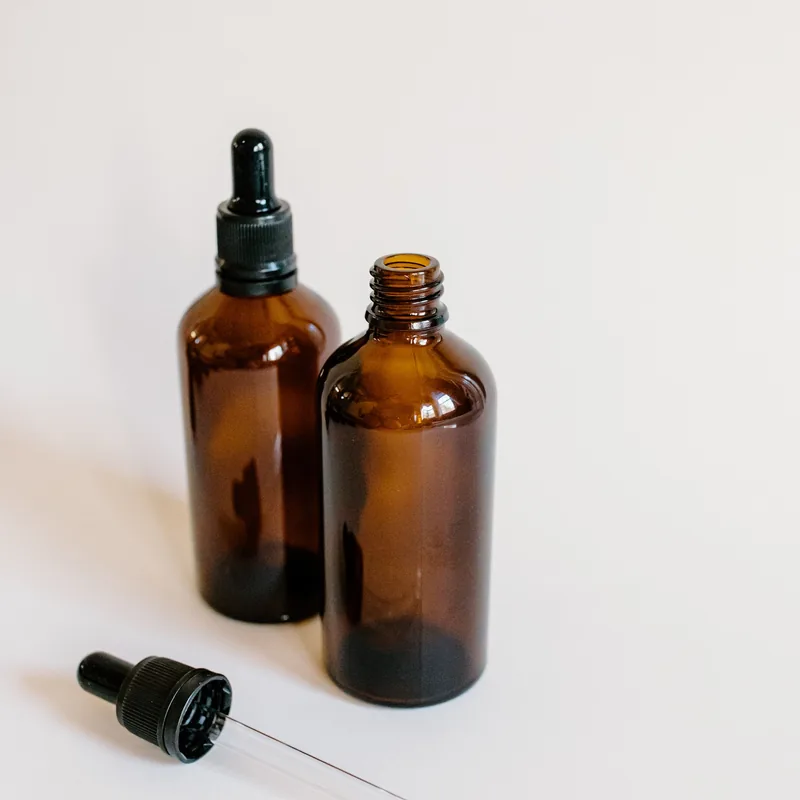
| Primary packaging: amber glass bottle, dropper, cap | USD 0.42–0.58 | Amber glass is the cheap part; a good dropper bulb is not. Ask for the supplier name |
| Label and folding carton | USD 0.03–0.10 | Digital label vs flexo print changes this by 3× at low volume |
| Filling, capping, QC, release | USD 0.18–0.25 | This line covers the nitrogen purge and the assay. A quote at USD 0.08 has neither |
| Documentation and third-party testing | USD 0.03–0.06 amortised | Micro, heavy metals and assay at an outside lab run USD 250–420 per batch |
FOB Guangzhou lands somewhere between USD 1.18 and 1.59 per 30 ml unit at 1,000 pcs for a properly made 15% formula. Anhydrous formats cost more: a 20% THD oil serum adds USD 0.15–0.25 of actives and cannot share a filling line without a full flush. EXW looks 6–9% cheaper and is not, because you inherit the export declaration, the forwarder relationship and the customs risk.
Two questions expose most quote inflation. First, ask for the price with packaging excluded and then with it included, same formula. Second, ask what the unit price becomes at 5,000 pcs. A plant that drops 22% is amortising tooling; a trader that drops 35% was marking up packaging.
The deposit is the point of no return. Before it goes, you should hold a folder that lets a third party reconstruct the transaction without you.
The one document a factory cannot give you is your own regulatory filing. In the EU the CPNP notification is submitted by your Responsible Person, not by us; we supply the CPSR data, the INCI, the GMP certificate and the batch COA, and your RP assembles the rest. Any supplier promising to “handle CPNP for you” is either acting as your RP without saying so, or bluffing. The QC lab and certification scope shows which of these tests run in house, and the export documentation checklist covers the country-specific extras for EU, UK, US and ASEAN.
A bench sample arrives in seven days and most buyers judge it by feel. Feel is the least reproducible thing you can measure. When a private label vitamin C serum manufacturer ships a sample with no numbers attached, you are testing their handwriting, not their chemistry. Ask for three figures with the courier tracking: pH at 25 °C, viscosity with the spindle and rpm used, and assay by HPLC. Then verify the pH yourself with a freshly calibrated meter, because a sample that reads 3.9 in your office will read 3.9 on the container.
Practical sampling points that save a batch:
If your market cannot carry a low-pH water serum, the honest alternative is a derivative. A 20% THD anhydrous oil serum removes the pH problem and the water-phase oxygen problem entirely, at a higher unit cost and a heavier skin feel, which is why the THD anhydrous oil serum exists in the library next to the L-ascorbic base.
Thirty-five days is measured from component arrival, not from formula approval. Stock 30 ml dropper components land in 7–10 days; a custom-colored airless shell takes 20–30 days and a new mould longer. That single mismatch is why first orders land at 60–70 days door to door while every email in the thread says 35.
Then the ocean adds a stage nobody quotes. Port to port to Northern Europe is 32–38 days, 45–55 door to door. A steel container in the sun reaches 55–60 °C, and the cartons on the top layer sit in that for weeks. For a 15% L-ascorbic serum, that is the equivalent of four to six weeks of 40 °C stability spent before the product reaches your warehouse, and it shows up later as a batch that goes amber in month five instead of month twelve. A private label vitamin C serum manufacturer cannot control the weather, but the packing specification and the shelf life printed on the carton are entirely inside their control.
Three ways to buy the margin back:
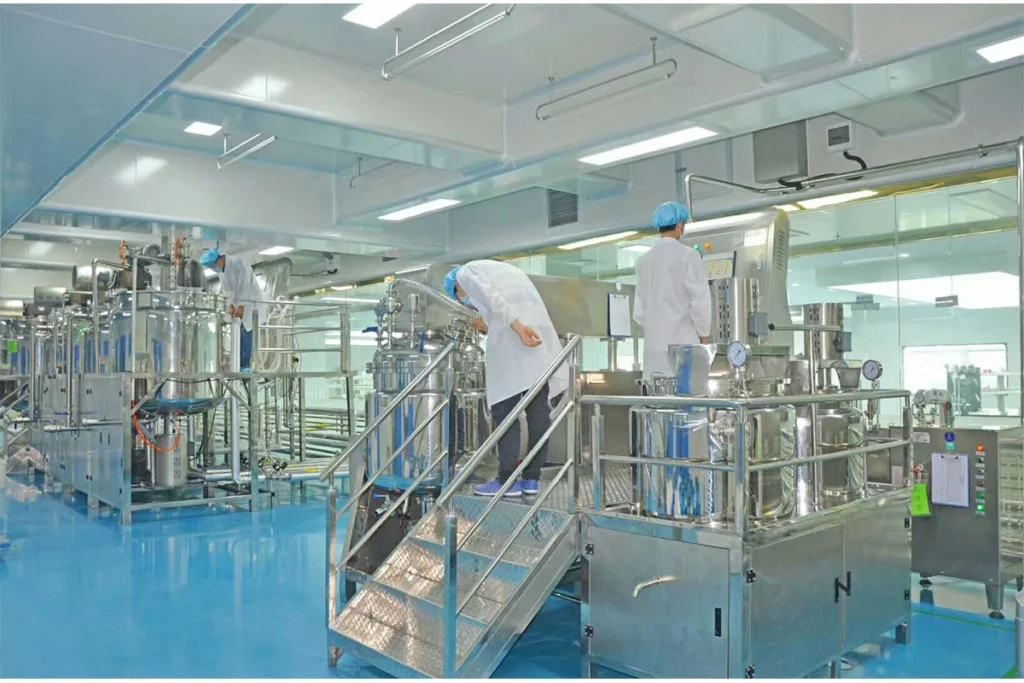
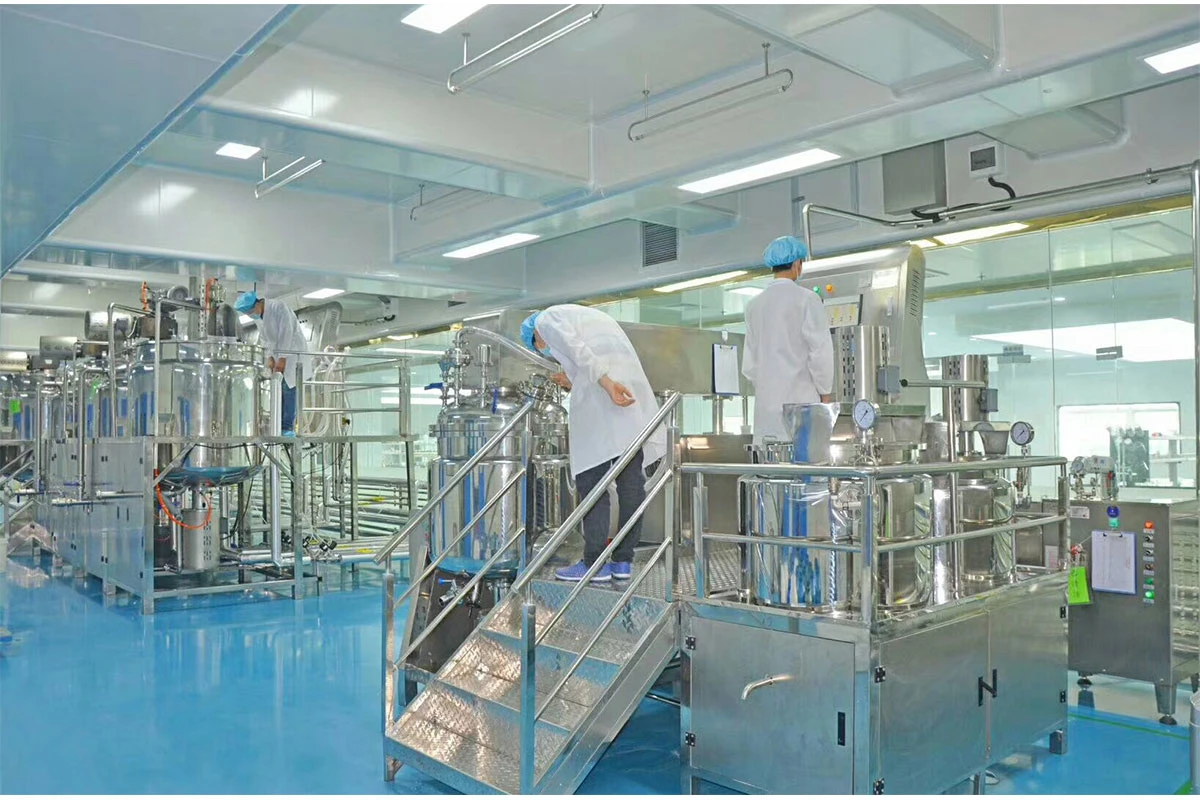
All of this runs inside a 1,000 pcs per SKU minimum, which is one 40 kg batch in a 50 L jacketed tank with about 15% processing loss. A second fill size is a second SKU, a second batch record and a second stability file, even when the liquid is identical. The emulsifying and filling hall is where that batch runs, the OEM and ODM scope explains which parts run under your formula and which under ours, and the MOQ breakdown explains what the 1,000 pcs actually covers.
Ask for the production license in the company’s legal name, the address on it, and the batch record of their last vitamin C run. Then compare the license address to the loading address on the bill of lading. If all three align and the batch record has a tank number and a QC release signature, you are dealing with a plant.
Between USD 1.18 and 1.59 FOB for a 30 ml amber dropper unit, split roughly 45% bulk, 40% packaging, 15% filling, QC and documentation. Anything below USD 1.00 usually means a lower active level, a thinner dropper bulb, or no nitrogen purge.
No. The CPNP submission is made by your Responsible Person inside the EU. The factory supplies the CPSR data, INCI, ISO 22716 certificate and batch COA that the RP needs. Budget two to four weeks for the RP to assemble the file, and do it before the first pallet ships, not after.
—
Send us your brief with the target concentration, fill size and destination market, and we will come back with a written specification sheet, an FOB price and a 35-day schedule within 48 hours. 1,000 pcs per SKU, samples in 7 days, and a batch record you are welcome to audit before the deposit leaves.
Most retinol programs do not fail in the marketing deck. They fail at the point where the active goes into the kettle, and nobody catches it for eight…
A custom serum formulation service is not a document you receive at the end. It is roughly forty locked decisions, and your brief names three of them. You…
A clean beauty serum formulation guide is only worth reading if it prices the removals. Taking a 30 ml brightening serum to a defensible silicone-free, PEG-free, phenoxyethanol-free position…