Serum Packaging Sizes That Fit Retail vs Clinic Channels
Fifteen, thirty, fifty or a hundred milliliters: serum packaging sizes for retail brands are decided by shelf economics, while clinic packs are decided by cost per treatment, and…
Ten percent is where niacinamide stops being a barrier ingredient and starts being an oil-control and tone ingredient. Above roughly 8% it also stops behaving itself in the kettle: the electrolyte load thins your gel, tackiness becomes the dominant skin-feel complaint, and the usable pH window narrows enough to rule out half the actives brands want to pair with it. A 10% niacinamide serum is the right product for oily and acne-prone targets, a 4% build is the right product for sensitive and barrier-repair targets, and those two are not interchangeable at any price point.

What follows is the mechanism, the three levers that decide whether 10% turns out elegant or unwearable, and the briefs where we tell brands to dose down before the first sample is made.
Niacinamide is a small, freely water-soluble molecule — cosmetic grade dissolves above 100 g per 100 mL of water at room temperature. That is why it is cheap and easy to add, and also why concentration changes the bulk physics of the base rather than only the label.
At 4% you add 40 g per liter of batch. At 10% you add 100 g. On a 30 ml fill that is 1.2 g against 3 g of active per unit, which is nothing on the cost sheet and everything on the rheology.
Two mechanisms do the work on skin, and they do not scale the same way:
So the concentration decision is really a decision about which of those two effects you are selling. If the claim is “visibly less shine by lunchtime”, you want the top of the range. If the claim is “calms and strengthens”, you are paying for a dose you cannot substantiate.
Three things break when you push past 8%, and they break in this order.
Viscosity. Niacinamide is a monovalent electrolyte in solution. Electrolytes screen the charges that keep a carbomer chain uncoiled, so the network collapses. In our own trials a 0.5% carbomer gel loaded with 10% niacinamide loses 40-60% of its zero-hour viscosity within 24 hours and keeps sliding. You can buy viscosity back with more carbomer, but past about 0.9% the product turns stringy and leaves a visible film on the face. The better route is an electrolyte-tolerant thickener — an associative or non-ionic polymer, or a xanthan and cellulose blend dosed for the salt load.
Tack. At 10%, niacinamide and glycerin together are sticky. Glycerin at 5-8% is fine at 4% niacinamide and unpleasant at 10%, because the two humectants stack on the skin surface and never dry down. Cut glycerin to 2-3%, add 1-2% dimethicone or a light caprylic/capric triglyceride, and the film sets. This is the single most common reason a 10% niacinamide serum feels cheap on the face when the formula on paper looks identical to a competitor’s.
pH. Niacinamide is comfortable between pH 4 and pH 7. Below pH 4, with heat and time, it hydrolyses to nicotinic acid — the compound behind the flushing reaction. That is the real constraint when someone asks to pair it with L-ascorbic acid, which needs pH 2.5-3.5 to stay in its reduced form. The two do not cancel each other out in the bottle; they simply cannot share a pH window. Either split them into morning and evening products, or build the brightening pair on a vitamin C derivative that runs at pH 5.5-6.5, which is exactly why we run 12% MAP alongside 4% niacinamide instead of forcing ascorbic acid into a niacinamide base.
| Position | Active load | pH target | Thickener | Best target | What it costs you |
|---|---|---|---|---|---|
| Oil control | 10% niacinamide + 1% zinc PCA | 5.5-6.0 | Electrolyte-tolerant | Oily, acne-prone, humid markets | Texture work; higher patch-test failure rate |
| Brightening pair | 5% niacinamide + 2% tranexamic acid | 5.5-6.0 | Carbomer tolerated | Uneven tone, post-acne marks | Two actives to document |
| Daily barrier | 4% niacinamide | 5.0-5.5 | Standard carbomer | Sensitive, dry, first-time users | Lower sebum claim ceiling |
| Hydrating lift | 10% niacinamide + multi-weight hyaluronic acid | 5.5-6.5 | Non-ionic gel | Combination skin, retail hero | Tack risk rises with the HA load |
The 10% niacinamide serum with 1% zinc PCA is the position brands ask for most, and it is a real product rather than a marketing number — our 10% niacinamide and zinc platform was built for humid markets where a heavy moisturiser is a non-starter. When the brief is uneven tone instead of shine, the 5% and tranexamic acid combination is the stronger answer, and you can see how the two positions differ across the niacinamide serum formats we run in production.
A note on the missing middle: 5% is a defensible number but rarely a brief on its own. Brands arrive either at 10% for the claim or at 4% for the tolerance, and 5% niacinamide with 2% tranexamic acid usually gets specified for the second active rather than for the niacinamide dose.
Dosing down is not a compromise. There are four briefs where 4% produces a better product than 10%, and we say so before sampling.
The honest version: 4% niacinamide is the better product for a large share of Western retail briefs, and 10% is the better product for oily skin and humid climates. Choosing a 10% niacinamide serum because a competitor launched one is how brands end up with a tacky serum they cannot defend in the product information file.
Three places where the concentration creates work you may not have budgeted for.
Stability. Niacinamide is one of the most stable cosmetic actives — unlike retinol it needs no encapsulation and no 25-40% overage. We run 3-5% overage and typically assay 97-100% of label after 12 weeks at 40°C and 75% relative humidity, with no color shift. That is the good news, and it is also why you should push back on any supplier quoting retinol-style stabilizer costs on a niacinamide brief.
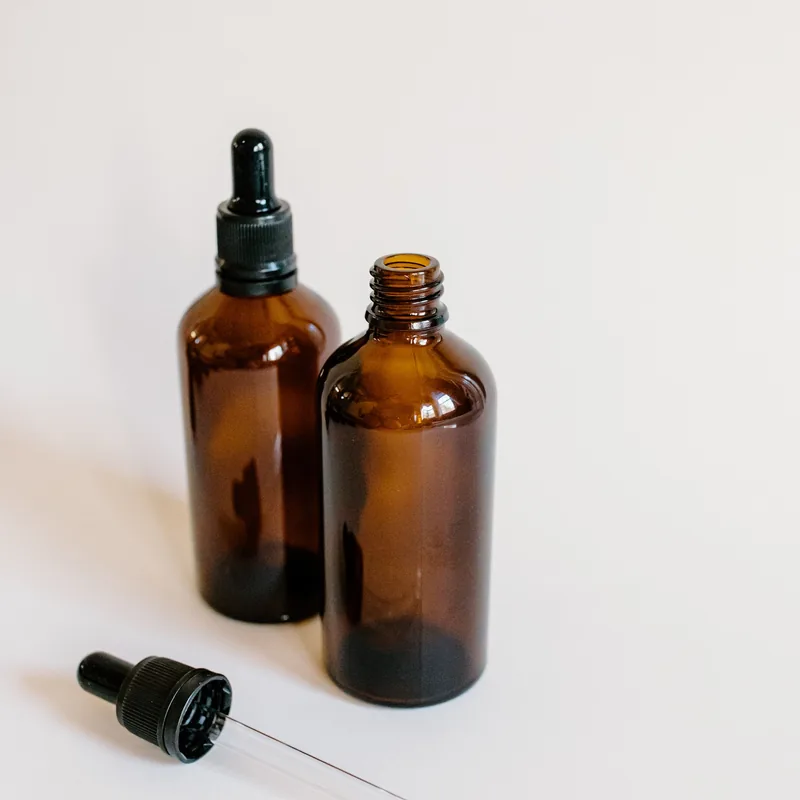
Packaging. Because the molecule is neither oxygen- nor light-sensitive, packaging is a texture and consumer decision rather than a stability one. A 30 ml airless pump, a 30 ml dropper or a 15 ml dropper all hold the claim; the container comparison we published walks through when each one earns its tooling. On a 10% formula the argument for airless is dose control and skin feel, not oxidation.
Cost. This is the number that surprises brands. Cosmetic-grade niacinamide runs roughly USD 12-20 per kg in bulk. Moving a 30 ml fill from 4% to 10% adds about 1.8 g of active per unit, which is 2 to 4 US cents. The raw material is not the cost. What costs money is the texture work, the larger patch-test panel driven by the higher irritation rate, and the reformulation if the first thickener choice fails at scale.
Claims. Under EU 1223/2009 a claim has to be substantiated in the product information file. “Reduces the appearance of shine” is defensible with sebum data. “Minimises pores” is a separate claim and needs its own study. At 10% you will be tempted to write the second one; write it only if you have run the study.
The process change that matters most is when the niacinamide goes in, and it is the opposite of what most briefs assume.
Production runs on the same basis as the rest of the range: 7 days from a locked brief for a 10% niacinamide serum sample, 35 days for bulk, from 1,000 pcs per SKU. Filling happens in an ISO 8 cleanroom under ISO 22716 and GMPC, and the quality and certifications page lists the documents we issue directly — COA, MSDS, full INCI, Certificate of Free Sale — against the ones your importer files, such as CPNP for the EU.
Where briefs go wrong most often is ordering 30 ml airless pumps before the viscosity decision is made. A thin gel dispensed from an airless pump reads as cheap; the same formula in a slightly stiffer base reads as a considered product. Lock the rheology first, then the container.
Not for oily or normal skin. It is too strong for a broad daily-use claim across sensitive skin, where the sting rate rises noticeably above 8%. If your range has one serum and one audience, start at 4-5%.
Yes, and predictably. Expect a 40-60% viscosity loss on a 0.5% carbomer system within 24 hours. Switch to an electrolyte-tolerant thickener or rebuild the polymer phase; adding carbomer to compensate is what makes the product stringy.
Not with L-ascorbic acid, which needs pH 2.5-3.5. Use a vitamin C derivative that runs at pH 5.5-6.5, or separate the two into morning and evening products. This is a pH conflict, not a chemical cancellation.
3-5%. It is one of the most stable actives in the catalog — no encapsulation, no special antioxidant package, and typically 97-100% of label after 12 weeks at 40°C.
—
Send us your brief with your target audience, container and market — we will come back within 48 hours with a formulation and a unit price for a 10% niacinamide serum or a 4% barrier build, and tell you plainly which one your claim can support. 1,000 pcs MOQ per SKU, 35-day bulk lead time.
Fifteen, thirty, fifty or a hundred milliliters: serum packaging sizes for retail brands are decided by shelf economics, while clinic packs are decided by cost per treatment, and…
Retinol does not fail in the bottle because the formula was wrong. It fails because the package lets oxygen in twice a day for six months. When a…
Buyers who raise the ISO 22716 vs GMPC certification question usually want a one-line answer about which logo looks better in a quotation pack. The honest answer is…