Serum Packaging Sizes That Fit Retail vs Clinic Channels
Fifteen, thirty, fifty or a hundred milliliters: serum packaging sizes for retail brands are decided by shelf economics, while clinic packs are decided by cost per treatment, and…
The global facial serum market continues to lead the skincare industry with high profit margins and explosive consumer demand. Unlike basic cleansers or moisturizers, facial serums command higher price points because consumers associate them directly with active, targeted efficacy—from clinical brightening to barrier restoration and healthy aging.
However, turning a skincare concept into a commercially successful product line hinges on one decisive factor: finding the right private label face serum manufacturer.
Whether you are an emerging indie beauty startup, an Amazon top seller, or an established salon chain, this comprehensive guide explores formulation options, packaging solutions, compliance certifications, and production workflows to help you scale efficiently.
1. OEM vs. ODM Face Serum Manufacturing: Which Is Right for You?
When vetting contract manufacturers, understanding the distinction between OEM (Original Equipment Manufacturing) and ODM (Original Design Manufacturing) will define your product development timeline and initial budget:
OEM (Custom Contract Manufacturing): You provide the specific formulation benchmark, custom active ingredients, or packaging blueprints. The factory handles bulk compounding, filling, and quality assurance strictly according to your specifications. Best suited for established brands with in-house cosmetic chemists or proprietary formulas.
ODM (Turnkey Private Labeling): The manufacturer provides market-tested, pre-approved stock formulations with proven stability data. You customize the fragrance profile, packaging finishes, and label design. This option drastically cuts R&D lead times from 6 months down to 4–6 weeks, making it ideal for rapid brand launches.
2. High-Demand Serum Formulations & Active Ingredients
Consumers today are ingredient-conscious and scrutinize product labels before purchasing. Our OEM/ODM R&D laboratories formulate across standard, clinical, and clean-beauty standards:
Serum Category
Core Active Ingredients
Texture & Skin Benefit
Brightening & Tone
10%–20% Ethyl Ascorbic Acid / L-Ascorbic Acid, Niacinamide, Alpha Arbutin, Tranexamic Acid
Fast-absorbing fluid; targets post-acne marks, sun spots, and overall dullness.
Hydrating & Plumping
Multi-Molecular Hyaluronic Acid (Nano to High MW), Polyglutamic Acid, Panthenol (B5)
Silky gel; restores multi-depth moisture without sticky residue.
Barrier Repair & Calming
Ceramide Complex (EOP, NP, AP), Centella Asiatica (Cica), Ectoin, Squalane
Milky milky emulsion; repairs compromised skin barriers and relieves redness.
Pro-Aging & Firming
Encapsulated Retinol / Retinal, Copper Tripeptide-1, Matrixyl 3000, Bakuchiol
Nourishing light emulsion or oil-in-water; smooths fine lines and stimulates collagen.
Clarifying & Exfoliating
2% Salicylic Acid (BHA), Glycolic Acid (AHA), Zinc PCA, Niacinamide
Water-light essence; unclogs pores, dissolves excess sebum, and minimizes breakouts.
3. Stability & Quality Testing: What Every Brand Owner Must Verify
A face serum can look flawless on day one, but active ingredients like Vitamin C and Retinol oxidize easily when exposed to ambient temperature, light, and air. A qualified cosmetic manufacturing partner must guarantee rigorous laboratory testing before scaling to mass batches:
Thermal Stability Testing: 3-month accelerated aging trials at 4°C, 25°C, 45°C, and cyclic freeze-thaw tests to verify viscosity, color retention, and separation resistance.
Microbial Limit Testing: Ensuring standard aerobic plate counts and zero presence of pathogens (Pseudomonas aeruginosa, Staphylococcus aureus, Candida albicans).
Packaging Compatibility: Checking for leaching, pump clogging, droplet leakage, and dropper bulb degradation under active contact.
Centrifuge Testing: Verifying emulsion integrity at 3,000–4,000 rpm for 30 minutes.
4. Packaging Selection: Protection Meets Brand Aesthetics
For active serums, the container is not just an aesthetic visual; it is an active preservation system:
Airless Pump Bottles (PP/PETG/Acrylic): Best for oxidation-prone formulas (Retinol, Vitamin C, Peptides). Prevents oxygen backflow and maximizes shelf life.
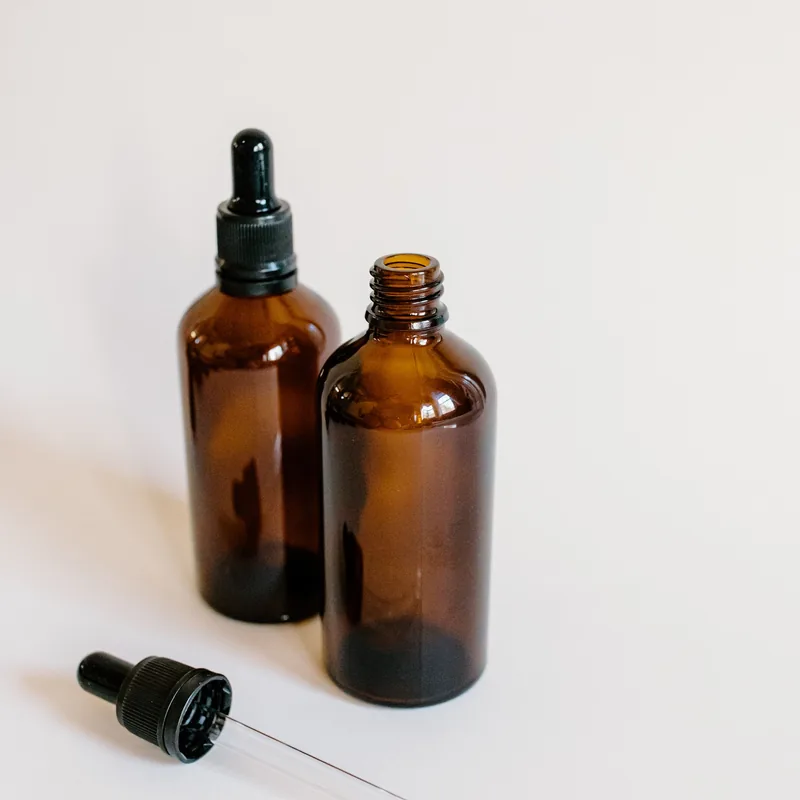
Amber / Opaque Glass Droppers: The classic clinical skincare look. UV-filtering amber or coated frosted bottles protect photo-sensitive actives while delivering precise dosage.
Dual-Chamber & Ampoule Packaging: Ideal for ultra-concentrated treatments, mixing fresh powder with liquid phase at the moment of application.
5. Step-by-Step Private Label Serum Workflow
Our streamlined OEM/ODM manufacturing cycle ensures complete transparency from initial concept to port delivery:
Plaintext[Step 1: Product Briefing] ➔ Select formulation type, target cost, packaging specs, & MOQ. ↓ [Step 2: Lab Sampling] ➔ Custom lab bench samples dispatched within 5–7 business days. ↓ [Step 3: Sample Approval] ➔ Refine texture, fragrance, absorption speed, and compatibility. ↓ [Step 4: Packaging & Art] ➔ Supply box/bottle artwork die-lines or select ready-to-ship stock containers. ↓ [Step 5: Bulk Production] ➔ GMPC/ISO cleanroom compounding, filling, labeling, and batch coding. ↓ [Step 6: QC & Shipment] ➔ Pre-shipment inspection report (COA) followed by global ocean/air logistics.
6. International Compliance & Certification Standards
Selling skincare across key global markets (North America, Europe, Middle East, Southeast Asia) requires adherence to strict cosmetic regulations:
ISO 22716 & GMPC: Certified cleanroom manufacturing ensuring zero cross-contamination and standardized standard operating procedures.
FDA Compliance: Formulation review adhering to US FDA cosmetic labeling guidelines and MoCRA requirements.
EU CPNP Dossier Support: Complete formulation transparency, Safety Data Sheets (MSDS), Certificate of Analysis (COA), and IFRA compliance for European market notifications.
7. Frequently Asked Questions (FAQ)
What is the typical Minimum Order Quantity (MOQ) for private label serums?
For stock formulas with standardized packaging, our starting MOQ begins at 1,000 to 2,000 units. For completely custom R&D active formulations or custom-molded packaging, MOQ typically starts at 3,000 to 5,000 units.
Can you formulate clean-beauty, vegan, and cruelty-free serums?
Yes. We support custom ingredient blacklists, including paraben-free, sulfate-free, mineral oil-free, synthetic dye-free, and 100% vegan formulations compliant with global clean beauty retail guidelines (e.g., Sephora Clean standard).
How long does the production process take?
Lab Samples: 5–7 business days.
Packaging Sourcing & Printing: 15–20 business days.
Mass Compounding & Filling: 15–25 business days after packaging arrives at our facility.
Can you handle stability testing for our custom active ingredients?
Yes. Our R&D testing team provides full documentation including 3-month thermal stress testing, centrifuge checks, pH monitoring, and microbial clearance reports.
Ready to Launch Your Custom Face Serum Line?
Partnering with an experienced, certified private label face serum manufacturer ensures consistent product quality, stable active delivery, and reliable order fulfillment.
Contact our formulation engineering team today to request our latest serum catalog, order custom benchmark samples, or discuss your private label manufacturing requirements.
Fifteen, thirty, fifty or a hundred milliliters: serum packaging sizes for retail brands are decided by shelf economics, while clinic packs are decided by cost per treatment, and…
Retinol does not fail in the bottle because the formula was wrong. It fails because the package lets oxygen in twice a day for six months. When a…
Buyers who raise the ISO 22716 vs GMPC certification question usually want a one-line answer about which logo looks better in a quotation pack. The honest answer is…